Choosing a professional makeup course starts with a clear goal. You may want to work with brides, develop your skills for fashion shoots or offer makeup and hairstyling together. The right programme gives you time to understand the techniques, practise them on different faces and receive individual feedback.
At Makeup Atelier Training Academy Dubai, our six- to ten-week professional programmes range from AED 19,900 to AED 26,000. Shorter specialist courses and personal makeup lessons have their own fees and learning objectives. This guide explains how to compare them and what to look for in a complete training experience.
How much does training cost?
Dubai offers personal lessons, introductory courses, specialist workshops and extended professional programmes. Their prices reflect different amounts of training and support. A personal lesson and a career-focused programme serve different learning goals, so compare what each fee actually covers.
| PROGRAMME | DURATION | FEE (AED) |
| PRO Makeup | 6 weeks | 19,900 |
| PRO Makeup | 8 weeks | 23,900 |
| Makeup & Hair | 10 weeks | 26,000 |
| Arabic PRO | 2 weeks | 10,900 |
| Upgrade | 2 days | 4,500 |
| Makeup by Yourself | Ask for schedule | 3,500 |
Contact us for the current timetable and full inclusions for your chosen programme.
What influences the fee?
Teaching time and depth
Check both the number of weeks and the total hours. A longer programme gives you more opportunities to revisit a technique, work on different models and refine your finish. Ask how the timetable divides demonstrations, theory, practical work and assessment.
Trainer experience and personal guidance
Look at the trainer’s professional portfolio and teaching approach. The ability to explain a technique clearly, identify why it is difficult for you and guide your next attempt is especially valuable. Small groups allow more time for individual feedback.
Certificates and diplomas
Ask for the exact qualification title, issuing organisation and assessment requirements. Check which document belongs to your chosen course and what it means for your plans. If you intend to work abroad, confirm the requirements of your destination and prospective employers.
Products, brushes, models and photography
Find out which materials are available for classroom use and which items you take home. Ask whether models, photography and assessment are included. These details help you understand the total cost of studying and preparing your portfolio.
What should you learn?
Skin preparation and colour theory
A well-prepared complexion starts with observation. You learn to assess the skin’s visible condition, select suitable textures and prepare it for the intended finish. The amount and combination of skincare and makeup matter, especially when creating a look for warm or humid conditions.
Colour theory helps you recognise undertones, choose harmonious shades and understand colour correction. You practise matching foundation, adjusting a shade and balancing colours across the eyes, cheeks and lips. This knowledge makes it easier to work with a wider range of skin tones.
Face shapes, contouring and complexion work
Facial proportions guide where you place contour, blush and highlight. You learn to study the cheekbones, jawline and other features, then adapt the placement to the client and the desired effect.
Complexion work includes choosing coverage, blending foundation into surrounding areas and controlling texture. Matte, satin and luminous finishes each require different product choices and application. You also learn to assess your result in different lighting and in photographs.
Essential makeup techniques
Core skills include eyeshadow blending, eyeliner, brow definition, lash application and lip shaping. You practise adapting an eye look to the model’s lid space and natural eye shape, rather than repeating the same placement on every face.
A complete look also requires balance. The intensity of a smoky eye affects your choices for the cheeks and lips. You learn how cream, liquid and powder products work together and how to build colour gradually while keeping the finish controlled.
Bridal makeup
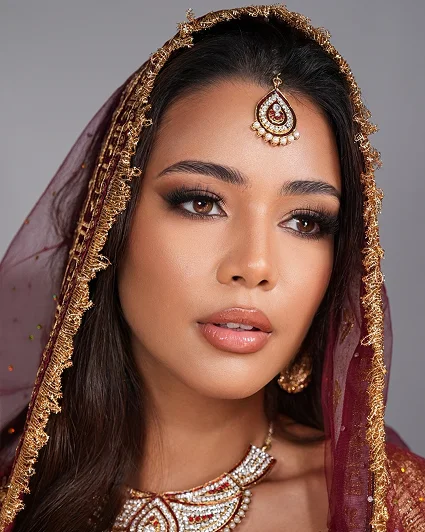
Bridal training brings technical skill and client communication together. A consultation helps you understand the bride’s preferences, outfit, schedule and photographic references. The finished makeup should feel personal and suit the occasion.
Practice can cover soft daytime bridal looks, more defined evening makeup and glamorous finishes. Skin preparation, product selection, setting and thoughtful touch-ups all contribute to wear. You also learn to organise your time and communicate calmly throughout the appointment.
Airbrush and HD makeup
Some courses offer airbrush training as a specialist module. It involves learning equipment control, suitable product use, coverage and maintenance. Check the syllabus if this technique is important to you.
Makeup for high-definition photography and video calls for careful attention to texture, blending and product build-up. You learn to assess how the finish appears on camera and under the lighting used for the shoot. The result depends on the products, application, skin and conditions.
Hygiene and professional preparation
Hygiene training covers preparing your workstation, handling products, cleaning tools and organising a kit between appointments. It should also explain disposable applicators, dispensing products onto a palette and following product instructions, including any required testing.
A professional consultation includes asking about sensitivities and recognising when to pause a service. Consistent preparation helps you work methodically and gives clients confidence in the appointment.
Developing a wider range of styles
Arabic, Asian and European makeup
Working in Dubai means meeting clients with varied tastes, traditions and references. Arabic makeup may involve expressive eyes, extended liner and sculpted definition. East Asian-inspired looks may explore luminous skin and softer colour placement, while South Asian bridal references can call for rich colour and detailed eye work.
These are starting points for discussion. Within every style, preferences vary. You learn to ask what the client likes, study her features and adapt the reference to her face, skin tone and occasion.
Editorial, fashion and photoshoot makeup
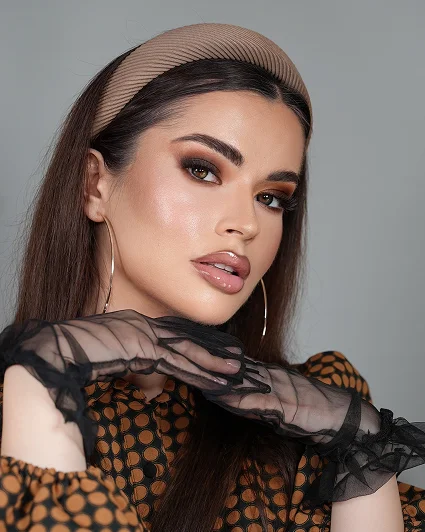
Editorial work develops your ability to respond to a creative brief. Colour, shape and texture can be used more experimentally, while every detail needs to work within the photograph.
Relevant training may include developing a mood board, planning a look, interpreting lighting and collaborating with photographers and stylists. Professional conduct on set, preparation and timing are part of the work. Ask which creative modules and shoot opportunities are included in your programme.
Practice, feedback and a portfolio
Working on real models
Practice on different faces helps you understand how a technique changes with eye shape, skin texture and facial proportions. During supervised work, a trainer can identify an uneven blend or misplaced line and help you correct it while the look is still in progress.
At our academy, models are provided for practical classes. Small groups support individual guidance, and you work with Make-Up Atelier Paris professional cosmetics during training.
Building your portfolio
Your portfolio should demonstrate the skills and range you want clients to book. A clear photograph can show the quality of your complexion work, symmetry and blending, as well as the overall style.
At our academy, photographs are taken after practical classes, so your portfolio develops throughout the course. Review those images with your trainer to identify improvements and select work that represents your current ability.
Preparing for professional work
Professional preparation includes discussing services, planning appointments and presenting your work. Ask about business modules when choosing a course. Relationships with fellow students, photographers and stylists can help you develop your professional network.
A short course or a full professional programme?
Choose personal lessons to improve your own makeup, or a specialist workshop to refine a particular skill. An extended professional programme offers broader training and more supervised practice for client work. Choose combined makeup and hair training if you want to offer both services.
Choose your next step
Compare the syllabus, practical hours, student work, inclusions and qualification. Share your goals, preferred language and availability with our team. We will help you choose a programme and send the next available dates. Explore our courses and request your syllabus.